 Athena Sols Team
Introduction: The State of Web Development in Mid-August 2026
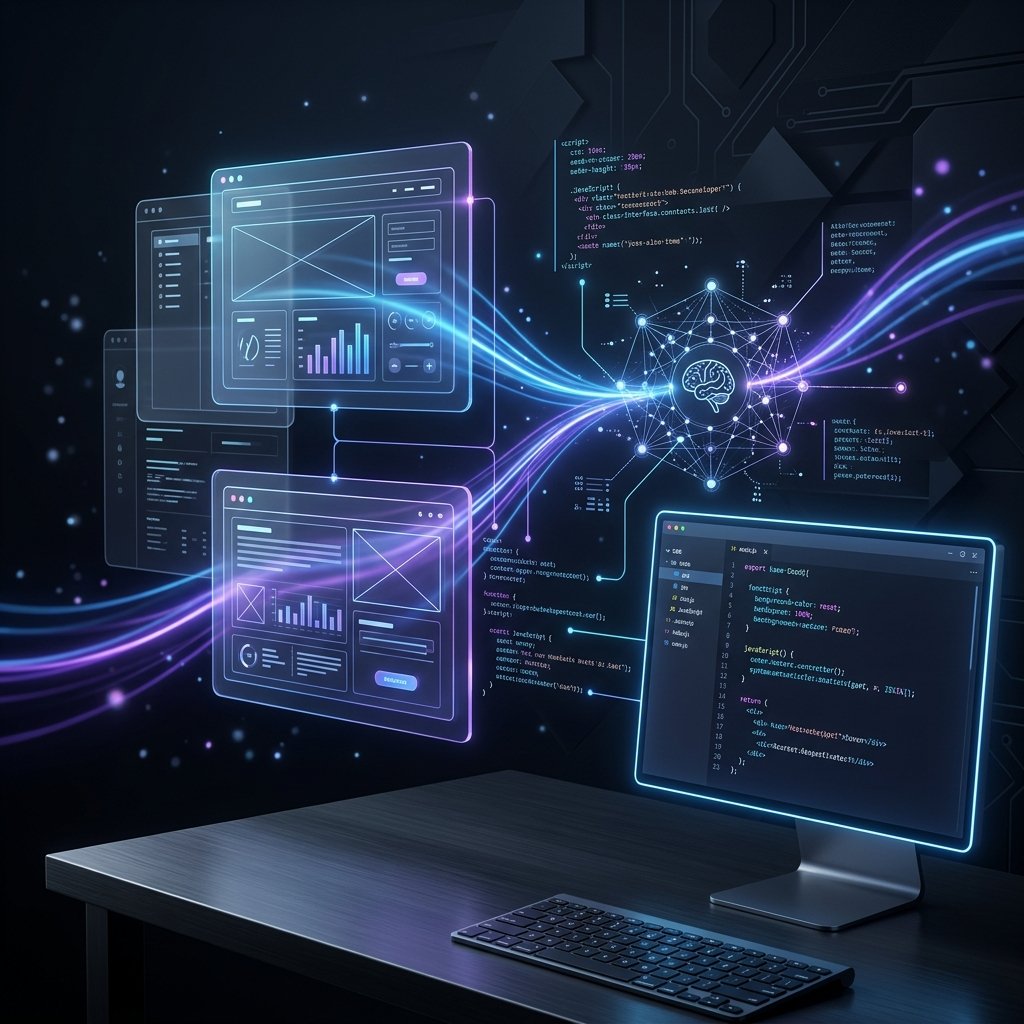
The speed of technological evolution is relentless. In mid-August 2026, we are witnessing a monumental shift in how custom software is architected, built, and secured. We have moved far past the era of using artificial intelligence as a simple writing assistant or an inline autocomplete tool. Today, AI is a core architectural framework component, giving rise to "AI-first" development paradigms.
For founders and engineering leaders, staying competitive means understanding these shifts in real-time. Whether you are bootstrapping a new MVP or scaling an enterprise platform, the decisions you make regarding AI integration, compliance, and meta-framework choices will define your product's longevity. Check our SEO strategies guide or explore migrating from WordPress to Next.js to build a high-performance web presence. At Athena Sols, we build high-performance web and mobile solutions using React, Next.js, and advanced AI. Here is our deep-dive analysis of the breaking tech trends from August 14–15, 2026, and how they impact your software strategy.
1. The Rise of Agentic Workflows: Moving Beyond Autocomplete
One of the most profound transitions in 2026 is the maturity of agentic workflows. Traditional AI code assistants functioned reactively—they waited for a human prompt and provided a single block of code. If the code failed or had a bug, the human developer had to identify the error, write a new prompt, and try again.
In contrast, agentic workflows are proactive and iterative. A modern developer acts as an orchestrator rather than a line-by-line writer. The agent is given a high-level goal (e.g., "Implement a secure subscription checkout flow with Stripe and handle webhook verification"). It then:
- Plans: Breaks down the goal into individual steps and files.
- Executes: Generates code across multiple non-contiguous files.
- Self-Corrects: Runs local test scripts, parses build errors, and automatically refactors its own code until the tests pass.
- Reports: Presents a completed, clean diff to the senior engineer for review.
This paradigm change speeds up the Software Development Life Cycle (SDLC) by up to 60% for standard features, allowing engineers to focus on system design, database indexing, user experience, and high-level business logic. For startups, this means the time-to-market for MVPs has shrunk from months to weeks.
2. Gemini 3.7 Flash and the Next-Gen Model Landscape
On August 13, 2026, the AI ecosystem received a major upgrade with the release of Google's Gemini 3.7 Flash. This model is a massive milestone because it targets the intersection of two critical developer needs: high-level reasoning and cost-efficiency.
Previously, developers had to choose between slow, expensive models for logical reasoning (like system architecture mapping) and fast, cheap models for simple tasks. Gemini 3.7 Flash breaks this trade-off by offering:
Web-Dev Specific Tuning
Optimized for processing Next.js App Router conventions, React Server Components (RSC), and TypeScript typing hierarchies.
Sub-Second Latencies
Critical for real-time applications, interactive chat systems, and real-time code execution backends.
At Athena Sols, we are already testing Gemini 3.7 Flash to drive custom client interactions and automate automated code auditing pipelines. Integrating these next-gen reasoning models into your product’s backend ensures users get instant, highly accurate answers without ballooning API costs.
3. Navigating the EU AI Act: AI Compliance & Security
As innovation races ahead, regulatory compliance has hit a critical milestone. By mid-August 2026, the EU AI Act has officially entered its enforcement phase. The European AI Office now actively monitors General Purpose AI (GPAI) models and requires detailed documentation regarding training data, safety testing, and algorithmic transparency.
For global software projects, this is a major regulatory shift. Even if your business is based in the US or Middle East, serving European users means you must ensure compliance. A critical concern for enterprises in 2026 is "Shadow AI"—the unauthorized integration of third-party AI models and APIs by developers without proper security mapping.
To mitigate these risks, founders should enforce strict DevSecOps protocols:
- Model Mapping: Document every LLM call, API route, and database sink.
- Data Isolation: Ensure user data sent to LLMs is not used for retraining unless explicitly consented.
- Fail-safes: Implement strict regex validation and guardrails on AI outputs to prevent prompt injection and data exfiltration.
4. Actionable Tech Stack Recommendations for 2026
To build a product that stands the test of time, you need an agile, modern technology stack. Based on current trends, we recommend the following combination:
| Layer | Technology | Why It's Critical in 2026 |
|---|---|---|
| Meta-Framework | Next.js 15+ | Support for React 19, Server Components, and streaming rendering templates for rapid load speeds. |
| Edge Compute | Cloudflare Workers / Deno | Zero cold starts and global low latency, bringing API endpoints closer to users. |
| AI Orchestration | Vercel AI SDK / LangChain | Unified interface for swapping models (Google Gemini, OpenAI, Claude) without refactoring logic. |
| UI Generation | v0 by Vercel / Tailwind CSS | Accelerates design-to-code flow, ensuring high-fidelity components are generated instantly. |
5. Future-Proofing Your Tech Architecture
Building software that remains viable long-term requires design patterns that expect change. Since LLM models change every few months, hardcoding a specific API client into your application is a recipe for maintenance nightmares.
Instead, use the Adapter Pattern or wrapper classes for your AI features. This allows you to hot-swap your underlying model from Claude to Gemini 3.7 Flash or vice-versa with a single line configuration change. Additionally, keep database models decoupled from raw LLM outputs by using structural validation tools like Zod to parse and validate AI-generated JSON before writing to your database.
Conclusion: Partnering with an AI-First Software Agency
The definition of software development has fundamentally changed. Coding is no longer about typing syntax; it's about engineering resilient, secure, and performant systems driven by artificial intelligence. While code automation speeds up the baseline creation, the demand for human expertise in system design, compliance, optimization, and security has never been higher.
At Athena Sols, we stay at the cutting edge of these technologies. We don't just build websites; we design scalable digital ecosystems that help founders lead their industries.
Let's Build the Future Together
Whether you are building a custom Next.js web application, planning an AI integration, or need an audit for EU AI Act compliance, our team of expert developers is ready to execute.
Get a Free ConsultationFrequently Asked Questions
What is an agentic workflow in software development?
An agentic workflow is an autonomous programming pipeline where AI agents analyze a goal, write code, run testing suites, review feedback, and self-correct errors until the objective is achieved, rather than simply writing code snippets on command.
Why should my company adopt Gemini 3.7 Flash?
Gemini 3.7 Flash offers high-level reasoning and software development optimization at a fraction of the cost and latency of older, larger reasoning models. It's ideal for enterprise integration where speed and cost-control are essential.
How does the EU AI Act affect software development outside Europe?
If your software application has active users based in the European Union, your company must comply with the EU AI Act's risk management, documentation, and data quality requirements, making DevSecOps and transparent AI pipelines critical globally.
What is Shadow AI and how can companies prevent it?
Shadow AI refers to the unauthorized use of third-party AI models or tools by developers without system monitoring. Companies can prevent it by establishing clear data policies, using unified middleware like the Vercel AI SDK, and conducting continuous dependency audits.